|
|
| ||||
|
Buying New Cars How To Buy New Cars Buy Cars Online First Time Car Buying Tips Hybrid Car Buying Tips Extended Auto Warranty Tips Canadian Car Buying Tips Top 10 Car Dealer Scams Military Personel Car Buying Our Reader's New Car Deals Auto Finance Auto Loans, Tips & Scams Auto Refinance Tips & Scams Bad Credit Auto Loan Tips Used Car Loan Tips Get Your Credit Report Online Used Cars Used Car History Reports How To Buy Used Cars Selling Your Used Car Used Car Classifieds Auto Auction Buying Tips Car Insurance Car Insurance Buying Tips Auto Leasing New Car Leasing Tips ALG Residual Values Car Leasing Software Reviews Government Sites Attorney General Sites DMV Sites - All 50 States Drivers License Sites Take A Break New Car Dealers - Ratings Rate Your Dealer Experience Free Spreadsheet Downloads Humor: Alternate Car Names RV Buying Tips & Scams How To Jump Start A Car LoserCars.com Crash Of The Month Gallery Furniture Buying Tips |
Chapter 6: Close the deal, avoiding needless dealer extras We'll expose what goes on in the business office. Dealer extras like extended warranty, rust proofing, etc. will be covered, as well as verifying loan payments. We'll also look at several common scams that a business manager can use to mislead you. We'll also cover buying warranties on the internet where the real bargains are. You're a fool if you don't at least get a free online quote. You need something to compare the dealer's quote to. Get free quotes BEFORE you go to a dealer. Rebate Tip Of The Month! Scams in the Business Office of Some Car Dealers
What is an extended warranty? Backup for the backup Protecting Your Service Contract Deposits | ||||
Be sure you're dealing with a solid extended warranty company
You want your warranty administrator to be able to pay your claims. You deal with 2 companies when you buy a warranty. One sells you the contract, the other
administers your claims, so background check both companies. The best case is a well funded company that markets and administers your warranty like
WarrantyDirect has plenty of funds, and has over 20 years of proven track record.
Extended Warranties Online in California
Californians ask me who is allowed to sell direct online extended auto coverage in California.
WarrantyDirect.com is again offering extended coverage for California
residents. Choose from 3 levels of coverage and 3 deductible options. Make sure you ask about the 3 optional coverages (these are amazing and add only $110 to the
cost). The policies are issued by General Fidelity Insurance Company (AM Best A- Excellent rating, January 2008).
Click here for a California quote.
Extended Warranty Myth: "I'll get it at the dealer, it's cheaper and more convenient".
Wrong. It costs more at the dealer. Car dealers are just middleman, you should buy your warranty direct from the source if you can. Car dealers are free to resell the
extended warranty to you at sky high prices. I always receive complaints from car buyers whose dealers tried to sell them new car warranties for $3000. If you buy from
the dealer, they usually do not show you the contract in advance, so you have no idea what you are signing up to other than their verbal promise, or marketing slick
sheets that leave out details that bite you in the butt later. Most car dealer warranties have too many restrictions and weasel clauses compared to the better world
class warranties out there that you can buy yourself for 50% less.
Do I really need to get an extended warranty?
You must decide that. If you lease for 36 months or less, you don't need one, and it's a scam for a dealer to sell you one. If you got suckered into a long term lease
like 60 months, you better buy one to cover the slack, as you are responsible for all repairs. But if you buy a new car instead of a lease, should you get one? It's
like buying an insurance policy. You spend a bit of money now to protect yourself later when you need it. Like insurance, if you don't buy it, you'll be looking over
your shoulder the rest of your life. Industry data lists the most common repairs are A/C, transmissions, and electrical. Most people I talk to bought their warranty
because they know that 10 minutes after the car maker's warranty expires, the antenna motor will fail. That's $200-$1000. Another common one, window motors, $600-$1000,
and transmission, $2,000.
One failure can recoup the cost of the warranty. This table lists common repair costs:
| Component | Cost in 2008 |
| Engine | $2600 |
| Transmission | $2000 |
| Brakes | $1350 |
| A/C System | $1400 |
Is it a Breakdown contract or a Wear & Tear contract? You want BOTH!
Often the extended warranty sold by car dealers is a confusing mechanical breakdown insurance policy that can cost over $4000! This is not
what you want. You want a wear and tear AND mechanical breakdown contract. Piston rings wear down, they don't break, so they are not covered by a
car dealer's mechanical breakdown policy. People complain that the car dealers lie to them and tell them "everything" is covered, giving the buyer a false
sense of security. Many car dealer warranties require that you have them or a franchised car dealer do the repairs. What happens when you can't get your car
to a dealer? Sites such as CARCHEX and
WarrantyDirect, provide contracts that are both wear & tear and mechanical breakdown, all in one
extended warranty contract. You can have any ASE certified repair shop do the work. If you don't get this type of package, you'll get screwed I guarantee it. I've
seen it happen to people I know.
Warranties are cheaper on dependable cars like Lexus, Honda, and Toyota. If you buy a car with a reputation for being unreliable like Kia, Land Rover etc., you should consider buying an extended warranty to cover these repairs or you'll be shelling out thousands later for these repairs.
Don't buy a warranty thinking it will cover pre existing failures on your car! Don't file a claim within the first 60 days!
Normally when you by a used car with no pre existing conditions, the car runs fine with no issues for several months. These are accepted odds by warranty company
actuaries. When things other than the norm happen, red flags go up. When a used car is sold, you don't have 4 parts break in the first 30 days. So when this happens,
it's industry practice that red flags go up, security people step in, the insurance actuaries know the odds of things going wrong, you get the picture. Contracts have
verbiage that even though your car was an inspected prior to selling you a warranty, it can still be shown if there was a pre-existing condition. So don't buy a used
car with problems thinking you'll just get a warranty to cover the repairs. These companies are a lot smarter than you. I tell people don't
file a claim within 60 days to stay off the radar map and not trigger any red flags. Warranty companies know that 90% of the claims filed in the first 30
days are fraudulent claims on pre-existing failures, that can often be proven by independent inspectors. Don't do it.
Beware of repair shops that refuse to work with your warranty company
There are a few scam artists out there. Before your warranty pays the service shop, they ask for a detailed written estimate of the repair, the parts, and the labor
from the repair shop. They know if the repair shop is overcharging standard repair labor hours, or forcing extra parts on you that you don't need. The guilty shops
lie and tell you they don't like your warranty company because their "checks bounce". Leave that service shop immediately.
Always Check The Contract Before You Buy, NOT After You Buy!
Don't leave a dealer with a false sense of security that you have a warranty protecting you from everything. Car dealer contracts have so many weasel clauses you're
lucky if half the claims are paid. I've done a lot of research in this area and created a check list of caveats to avoid. Dig out your current extended warranty
contract and see if it's as good as you thought. Car dealer warranty exclusions are printed in the policy book which conveniently arrives
AFTER you buy the warranty, because they don't want you to dig. The more you dig, the more you'll find. If they can't show you a
copy of the contract, DON'T BUY THE WARRANTY! Sales brochures are not contracts. Lies from salespeople are not contracts. Before you buy you want to see IN WRITING
"What is not Covered". Warranty companies are successful on the internet, as savvy consumers who passed on the 200% markups of dealers hit the web to buy from the
sources at significant savings. Online warranty sites should have a sample contract online for you to view, usually in Adobe .PDF format. Tell the dealer sites such
as WarrantyDirect have actual contracts online for you to view, so why not the dealer too?
Why many car dealers sell cheap 3rd party extended warranties
Why did your Ford dealer not sell you a Ford extended warranty? Same for GM and Chrysler? Car makers dictate how much they'll pay the dealer to perform repairs.
Sometimes these conditions are not in favor of the dealer, so they look to cheap 3rd party warranties that provide better profit margin for them. But sometimes these
warranty companies are not backed by insurance or claims reserve accounts, and go out of business, and you lose. As contracts expire, the remaining reserve dollars
and any earned income belongs to the dealer.
The dealer will say you'll get car rental reimbursement with the extended warranty. You may find out later, it's not during the 3 year standard warranty. I got stung by this bumble bee the first year I owned my Trans Am. I sent in for reimbursement for $650 worth of car rental and Genital Motors refused to pay, saying it was not covered. So why did I buy this warranty? Why did the GM dealer lie to me and say that anytime my car breaks down I get rental coverage? Check the contract book for your warranty, look for the section titled "What is NOT covered", and the obscure phrase "any repair covered by the standard warranty". So basically car dealers hype the hell out of car rental reimbursement that you cannot use. It's more like roadside Ass-istance.
Third Party Extended Warranties, make sure you get a "Wear & Tear" contract.
Some are great like the wear and tear extended warranties from WarrantyDirect. Other companies really suck
canal water with lesser coverage of "mechanical breakdown" warranties. My friend had a mechanical breakdown warranty and all his parts that failed were excluded from
coverage, as mechanical breakdown warranties weasel out by claiming it's wear and tear, and not covered. You'll get mail offers from 3rd party companies for extended
warranties 40% less than the manufacturer. My advice is to avoid dealing with the cheapie mail order warranty companies, don't be duped by their suspiciously low
prices. Stick to well known web sites.
Before you buy a warranty, ask to see a sample contract, itemizing what is covered, and what is not covered
Any reputable company will fax you an advance copy to read. If they refuse, DO NOT BUY FROM THEM! This list is part of the contract. If a part in question is not
listed or implied by the "What Is Covered" list, than it is not covered, and check the "What Is Not Covered" list, but verify it with the warranty company.
The marketing sheet dealers show you is not a contract. If a slick sheet is all they show you, don't buy. You'll be surprised what's not covered. Most extended
warranties have a "What is not covered" page. It's a tricky play on words, but here's what it means to your bottom line:
WARNING! Some Extended Warranties DO NOT pay for car rental reimbursement during the standard warranty period! My GM Protection Plan was a prime example. If you have a 3 year manufacturer's warranty, any car rental expense you incur for the first three years may not be covered. This means even if the engine dies, and it's their fault, and you have no car for a week, you're out of luck! The better ones like WarrantyDirect, cover your rental.
They may not replace your parts with originals. It happened to me with my GM Protection Plan. In 1994 Pontiac repaired a hole on my fuel tank seam under the extended warranty, but should have replaced it. Why take a chance with someone's life? They repaired it, 2 months later I'm back, same problem. They fix it again, 2 months later, it's leaking again. I take it to another shop and discover Pontiac had welded a penny to the tank as a plug! Copper is corrosive! They refused to reimburse me. GM's complaint line was a joke, offering to replace the tank if I paid them $500. How generous. Once I got the State of Florida Attorney General's Consumer Affairs Division after the dealer, they reimbursed me only $300 worth of parts for my car, even though I spent hundreds on car rental, and a new tank. So save all your records in a notebook. That's why I drive a Lexus now, I got sick of that "great GM feeling".
If they say they have loaner cars, don't believe it! One dealer told us they have loaner cars. We found out they charge for "loaner" cars. BMW, Infiniti, and Lexus loan you a BMW, Infiniti, or Lexus, respectively. It's a whole different way of doing business.
After You Buy Your Extended Warranty
Your work is not done. Extended warranty contracts warn you to maintain your vehicle according to the manufacturer's instructions in the owner's manual, perform all
the required maintenance, oil changes, fluids, etc., and only use approved parts and liquids, you know the drill. So buy a 3 ring binder to store all your receipts as
CYA proof that you had all proper maintenance performed. Every time I go in for an oil change or other repairs, I just add the receipt to the notebook. Some warranty
companies are real strict about this, and use it as a weasel clause to get out of paying for repairs that were otherwise covered. Some warranty companies have
maintenance logs in their contract books that you can use to log each service performed on your car. We have lots more detail that you should read in our other
chapter How to buy an extended warranty and avoid scams
Arguments Dealers Use To Coax More Cash From Your Wallet:
|
There was a phrase on his contract stating subject to loan approval. This Jedi mind trick means: "The deal is not final, even though you signed this contract." Most dealers use this phrase. They were already charging him 18% interest! How much higher can you go? They said he had to produce an additional $1000 AND his payments would go up $50/month. 18% is normal for someone with bad credit. Bumping up his payments is needless, they knew how much he qualified for when he signed. If this was the state of Washington, they would be breaking the law! My friend wanted to sue, but even his lawyer said it was legal. So the deal was not really done, and this is where you can be in for a nasty surprise! He had a few hundred miles on the truck, but he took the truck back, and got his old truck back, after a salesman had taken it home, left the window open, and a cat urinated on the seat. They even tried to bill my friend for the cleaning! He was luckier than most folks: he got his original truck back. Read your contract thoroughly and know all the clauses, so there are no surprises. Don't let them speed sign you through. If you don't pay up, they'll report the car STOLEN. You have a legitimate loan or lease contract, but they are filing grand theft auto against you. If the cops come after you, show them your original valid loan or lease documents. There's nothing they can do. What they are doing is illegal in some states. |
I wish all states were as strict as Washington with bait and switch interest rates. In Washington, after a deal is agreed upon and the contract signed, if you are contacted by the dealer saying they need a larger down payment or higher monthly payments, you are not required to accept these terms. They have 3 working days from the time of purchase/lease to finance the sale according to the contract, because we know that they know how much you qualify for because they ran a credit check. When the dealer fails to locate the financing specified in the contract, there is no binding contract and they must return your contract documents, down payment and trade-in vehicle to you. If you have taken possession of the car, return it when notified that they want more money. I wish we had this law in Florida. Most states don't have a 3 day "buyer's remorse" law.
When they try this scam on you, you'll say I'm bringing the car back in, I want my trade-in back. "Oh, I'm really sorry, we already sold your trade in. Get us the money by next week, or we will repossess your car."
How do you get out of this? Never take the car the same day you sign if you finance at the dealer. It's tempting, they give you the keys, but don't take them. You'll be back for the car when the deal is final. Tell them to call you when they get the coupon book, and you'll come for the car at that time. The Spot Delivery scam is usually done to people with bad credit. They can squeeze more out them because they have them at a disadvantage. They don't care if you default on the loan because they get cash from the bank. So what if the car gets repossessed. That's the bank's problem, they own the car. When you finance a computer at Best Buy or Comp USA, do they call you up later to tell you that you could not get these interest rates? No.
Here's what one automall did to a friend: they charged him MSRP for his Prelude, and 18% APR. Some dealers charge 18%, and its up to smart buyers nix it. He had good credit, he was just naive. After all this, they didn't give him the "Year supply of Pepsi" they were hyping, with thousands of cases in the showroom for the blitz. No Pepsi for you! For one year! So another friend went in there with him and made a loud enough stink in the showroom, then he finally got the Pepsi Nazi to anti up several cases of Pepsi, but certainly not a year's worth. Do you really need these insulting car buying games? Be cautious of "buy here, pay here, no credit, don't sweat it" dealers and places that give away toasters, stereos, "vacations", etc. These are too insulting for intelligent people. You just want to buy a car, without a TV financed into the deal. I'm not trying to knock the manufacturers, just the sales methods of some dealers, which apparently the manufacturers have no control over, or look the other way.
Optional Extras at the car Dealer
If you fall asleep at the wheel now, you'll lose another $3500, which is icing for the dealer. You'll drive home not knowing you bought these extras. Some dealers
sneak them onto your contract or bury them in your monthly payments. If you are a payment buyer, you won't notice them. On a 36 month loan, the extras below will cost
an additional $97 plus interest per month. Here are some extras they may "offer" you:
| Typical "Extras" at Closing | ||
| Description | Your Price | Dealer's Cost |
| Rust Proofing | $800 | $40 |
| Extended Warranty | $2000 | |
| Fabric Protector | $300 | $5 |
| Car Alarm | $400 | |
| Paint Sealant | $300 | |
| Credit Life Insurance | $200 | |
| Detailing/Pin striping | $299 | $40 |
| Total of Extras: | $4299 | $1025 |
| Total added to your monthly payment on a 48 month loan | $89 | |
The dealer will give you $1500 less than market value for your trade-in. Then he'll sell it for $1500 above market value. If he sold you a $25000 car, he could profit $4000 on the car, another $3000 on your trade-in, and $3499 on the extras. Total Profit: $10499! He deserves to profit, but not that much!
Don't buy the rust proofing from the dealer.
This is pure profit for them. They charge $800 and up for it, and how do you know if it's even on the car? Most cars have 6 year/100000 mile rust warranties, so you
don't need rust protection. I've have a 1988 Trans AM GTA with no sign of rust. Tell them you don't want it, and if they say it's already on the car, tell them you're
not paying for it. Wash and wax your car, you'll be fine. The salesman at Pontiac told me:
"But Jeff, you know the manufacturers just coat the underneath of the car with a quick worthless spray.
You really need our extra rust proofing which is much more thorough if you want effective protection"
Ah, the impending doom sales tactic. I told him that if GM does such a lousy job like that, I don't want the car now, at any price. I'm sure GM would be interested to know that stupid uninformed salesman are sabotaging their credibility. How can the squirt job that the dealer gives you be better than the factory's?
Don't buy the Fabric Protection!Don't even THINK about buying the car alarm from the dealer!
If you do buy their alarm get all features in writing. Is it wired to the trunk, sunroof hood and all 4 doors? My friend found the alarm for his new 1997 Mazda 626 was
not connected to the trunk or hood. When he went back to complain, Mr. Plaid told him "Oh, that's extra". If I buy a car alarm for
$400, am I wrong to assume it's connected to the doors, hood, and trunk? That's what I get if I buy it at a stereo shop for $199 and have them install it. Why spend
$400 on an alarm with 2 stupid wires?
Ever been at a mall, and heard an alarm go off? You know the one, its the same alarm everywhere. This worthless alarm is installed on zillions of cars, and you hear it going off everywhere for no reason at all, on a clear sunny day. Also, stay away from alarms that talk to you. "Danger. You are too close to the vehicle. Back off now". Drive by one of these cars, and it sets off. Let's add this to the alarm: "Danger, you are wasting your money. Back out of the deal now!"
Dealers use Code Alarm, Excalibur, and Viper. Code Alarms are typically refurbished and repackaged, often unknown to the dealer. Dealers pay $100 - $150 for Code Alarms. There is even one made by Micro for $38!! They pay maybe $50 and sell them for $400 and up, that's why it is a worthless add on. What makes these cheap alarms trigger all the time? Cheap, improperly placed sensors, thermal sensitivity, parts out of spec, and poor wiring. You get what you pay for, nothing better, and usually worse. Dealers use outside installers to install the alarm. Clifford alarms are OK, but are too temperamental and trigger easily. Do yourself a favor, go spend the $300-500 at a reputable Hi-Fi shop for a real car alarm instead. Don't go for the cheap deal du jour stores like the window tint shops that sell $99 alarms, do it right or don't do it. One brand I recommend is VSE, starting at about $400 installed. They are reliable, sensors are stable, false alarms are rare, they have zoned outputs, allowing you to determine where the trigger came from. Another decent brand is Delta, with an installed cost from $100-$400. Buy a model in between, as the $100 install is bare bones. Have them wire your alarm to lock the doors and roll up the windows. This may cost more, but it's so cool, I have it on my GTA. But don't buy it from the dealer, or your life will be hell. If they force it on you, or tell you it's already on the car, have them remove it, or don't buy the car. It should be easy for them to remove since it's not wired to the hood or trunk, right? "That's Extra".
Remote ignition start is not recommended for manual transmissions! Many people leave the car in gear, so it could get up and leave you if you remote start it.
The Lowdown on Lojack
Lojack is a device police use to locate your stolen car. It costs around $600, and is installed by the car dealer. They hide Lojack in the car and don't tell you
where it is. If the car is stolen, call the police, and they activate your LoJack remotely from their tower. Then cops with a specially equipped patrol car triangulate
the signal and get your car back! Cops love them because where there's smoke, there's fire, and if they find one stolen car, there's usually more. My coworker's Honda
Accord was stolen (who hasn't had their Accord stolen) and police activated his Lojack. They found his car in a guy's garage at home in Lauderdale Lakes. He was
stripping the car, and another stolen car. Cops usually find your car within 1 hour after you report it stolen, so don't hesitate. I spoke with an FHP officer
who tracks stolen cars. He tracked a stolen car to a Port of Miami warehouse, where it was already cut up into chunks and stored in cargo containers. The battery
backed Lojack was still transmitting, and the thieves had no idea it was there. Don't let the dealer claim that "alarms save 50% off your
auto insurance", they don't. It could save up to 10% off the theft portion of your auto insurance, about $15. Some insurance companies
may even require you to have it, depending on what car you buy. My insurance would give me 5% off the $117 theft portion of my auto insurance, which is a whole $6!!
I'm going to Disney World! Find out from Lojack who their authorized installers are. If you can handle $600, Lojack can be worth it. If your car is stolen, you may get
it back intact, with some ignition damage. Lojack makes a car alarm that is both a standard alarm and Lojack. Some cars now have GPS (Global Positioning Satellite)
capability, that can pinpoint the car's location anywhere in the world within a few feet. Check out these devices too.
Don't buy the paint protection!
Don't waste your money on this junk. My friend who worked at a Chevy dealer said it comes in a $5 bottle. It's just wax, and they make promises about it lasting
for years. NO car wax lasts for years. Read the warranty book for "Autoarmor", it says the warranty is void if you don't wash & wax on a regular basis. The
salesman tells you it lasts 2 years or more without waxing. It's amazing how gullible Americans are, tell them what they want to hear, and they'll believe it.
|
2) Remove wrinkles by rubbing a cream on your face. 3) Go 2 years without waxing your car by rubbing a cream on it. |
Don't buy Credit Life insurance at the dealer!
If you have bad credit, they may tell you that you MUST take this insurance. This lie is against the law. They usually do this to females, first time buyers,
and people with poor credit, who don't know better. You can buy it cheaper from your insurance agent, but Credit Disability Insurance is a joke. It's supposed to make
your payments if you are injured. But it does not kick in until after 15 days. If you were injured for 12 days, you get nothing, so
it's a meaningless policy. Like other insurance, they sock you with pre-existing conditions like your medical and dental insurance does. Many dealers conveniently
sneak/finance it into the loan, so now you pay interest on that too. Argue with them and they'll say
"But Jeff, I'm just trying to understand this. Don't you care about your family? If
something happened to you, do you want them to be burdened with this? Wouldn't you want them to be cared for?"
Tell them you don't care about your family. How can answer to that one? But if you really want it, buy it from your insurance agent. Why pay 200% more at the dealer for a policy that most likely wont pay your bills? One salesman told me many dealers don't bother with this anymore because of liabilities. Customers have sued dealers and won millions for not disclosing credit life or for misleading them.
Detailing
A friend of mine installs pin striping and detailing for car dealerships. He charges $12 to pinstripe a car and they sell it for $99. He charges $2 for door edge
guards, and they charge $70 - $90. Sometimes he sells them an "appearance package" with pin striping, door edge guards, and wheel trim for $30, and they sell it for
$299. Some dealers act like they are giving it away by "slashing" $200 off the cost, charging $99. That's still over 3 times what they paid for it. My friend does
several cars at once for them. If 20 cars on the lot have the appearance package, the dealer could bring in $6000 in detailing.
Signing The Papers
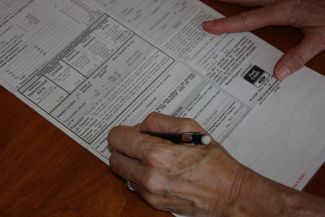
Always check their numbers carefully. Don't sign until you are sure. Check the payments against the final cost of the car to make sure they didn't sneak anything
in. You borrow $20,000 for a car at 8% for 4 years. If you are smart and have a loan calculator, you'll see that your monthly payments will be $488.26. And the total
of your loan is $23, 436.48. You can see the total loan interest is $3436.41 But let's say the dealer's figure is $504, a small difference. Their total is 504*48=24192.
They are ripping you off by $755.52! Where did it come from? Maybe he slid some extras in or he "forgot" to mention you also bought credit life insurance. Just because
they do everything on the computer, does not mean it's correct. My friend had the finance manager compare his deal for leasing or buying and the dealer made it look
like leasing was cheaper, which is a lie. When confronted, he came up with some excuse like "maybe I entered a parameter wrong",
or "the machine's been acting up today". The only one acting up is them. If their payment calculations differ more than a dollar from
yours, question them. They may say "It's only $9 per month, you must have made a mistake." But on a 4 year loan this translates
into 48*9 = $432. Once you sign the contract, you effectively agree that you "read and understand" all the numbers. The total of all your monthly payments that you
calculate should match theirs to within a few dollars. The lookup tables in all the books are accurate, and don't let them tell you otherwise.
With auto loans you pay nearly all interest in the first year, and little principal. That's why impulse buyers like my sister end up "in the bucket" after a year if they decide to sell the car. You buy a Saturn for $13000 and a year later decide to trade it in for a Toyota Celica. The Saturn is now worth $10000, the new Celica costs $12000, and you have NO equity in the Saturn, because you have only been paying back interest for one year, and very little principal. So now you are upside down $3000 on your Saturn and you are at the mercy of the dealer if you want that Celica. How do you get out of this? Don't get into it in the first place. When you buy a car always put down 20%, then you will have equity in the car. Dealers push "0 money down" to sell the car. They don't care if you're upside down, or if you get repossessed. They never tell you that you are paying mostly interest the first year and building little equity. Ask them to print out an interest and principal table for your payments and see. Another reason to put 20% down: If you buy a $20000 car today, and it gets stolen today, your insurance company will only pay you fair market value of the car, which is $3000-$4000 less. So now you have a check for $16000, but you still owe the bank $4000. You may want to purchase gap insurance if you don't put down 20%. Put down as much as you can, for as short a loan term as you can afford. Your interest rate is lower with short term loans.
One ignorant girl emailed me that I was arrogant, and "not everyone has 20% to put down". Well guess what, if you don't have 20% to put down, you can't afford the car, and you should not be buying it. My first 3 cars were old, used, and all cost < $3000, because I did not have 20% to put down on a new car, and I got by just fine. Now that I have my BSEE and a good job, I put down more than 20% when I buy a new car. If you put down 20%, you will not be upside down, and you'll get a lower interest rate. My credit union drops the interest rate by 3/4 point if you put down 20%, which even makes your monthly payments less. Pay a little more now to pay a little less later. This can be major savings in your monthly payment. There's nothing arrogant about being wise enough to think big picture with your money. You and I are paying high insurance premiums to pay for all the accidents caused by uninsured ignorant impulsive morons who rushed out to buy new cars they can't afford and now they can't afford car insurance because they over extended themselves and got upside down on their loan.
What If I'm Upside Down On My Loan?
Many people email me to ask what to do if they are upside down. I always tell them, don't buy a new car. Send in extra principal payments until you are no
longer upside down, then buy a car. A person who is upside down on a loan and wants a new car is a victim.
Here's what happens: You want a $14000 car, and you owe $12000 on your current car.
| Price of the car you want to buy | $14000 |
| What You still owe on your Trade-in | $12000 |
| Retail market Value of your Trade-in (What your car is worth on the open market) | $9000 |
| Wholesale Value of your Trade-in (What the dealer will pay you for your trade-in) | $8000 |
| What the dealer could sell your Trade-in for | $10000 |
You see an ad saying they'll pay off your current loan no matter how much you still owe. If you trade in your car, the dealer will offer you $8000, the wholesale value. They'll never give you market value for your trade-in. If he does, he'll get you on the back end by charging MSRP, or adding more options. If the dealer gives you $8000 (wholesale) for the trade-in, you still owe $4000 to the bank. He'll payoff your loan of $12000 to the bank for your car, now he owns it. But you now owe $4000 to the dealer, which is folded into the new loan for the $14000 car you are buying. You are thus taking out a new loan for $18000. The dealer makes you think he's giving you something for your trade-in, but you don't own the car, the bank does. In fact, you're getting nothing from the dealer, they just moved your loan balance to the new car. Not only did the dealer sell you a car at MSRP making probably $2000, he inherits the balance you owe the bank with the interest, and he in turn sells your trade-in for maybe $10000, profiting $2000 on the trade-in as well. Now the dealer made $4000, plus interest from the $4000 you carried forward from the old loan. When you are upside on a loan, dealers reap huge rewards, because you are desperate to get out of the current loan, and you make things worse for yourself by becoming MORE upside down. This can be even worse on a lease because the dealer will make you pay the $4000 as a cap cost reduction, and he'll pad it by a few hundred dollars. They'll ask you for $4350 as a down payment.
Suggestions if you don't want optional extras:
If every car on the lot has $3000 worth of options, have the dealer order a car from the factory. This is how I bought my 1988 Trans AM GTA. It takes 6-12 weeks,
this is a great way to buy a car with the options and colors you want. But there are caveats. Save all the paperwork. When I ordered my car through the dealer, the
paperwork had a price of $18000. But when the car arrived, the dealer could not find their copy of my buyer's order, among tons of other documentation in my folder.
They tried to renegotiate the deal for $21000! After I threatened to call Consumer Affairs and Channel 7 with my original carbon copy of the buyers form, they
relented. But I still had to argue with them for 4 hours to get the price back down to $18000. Another caveat is sometimes you may not get the rebate because it might
only be valid for vehicles in dealer stock. Lastly, if they appraise your trade-in, it could change 8 weeks later when your new car arrives. You might damage your
trade-in before the new car arrives, or they'll claim you put too many miles on it, invalidating their quote.
I went back down Monday, and here's what they said to me,
PONTIAC: "We can't fix these defects, we don't know that you didn't cause this damage yourself."
ME: "But Mr. Liar said to bring the car in today and you would take care of it".
PONTIAC: "You should have itemized them when you bought the car. It doesn't matter what Mr. Liar said, only the list
matters."
Make them sign off on every defect before you drive off with the car. Have someone with you to go over the outside of the car with a fine toothed comb. Check all lights and temperature gauges. Make sure the tires have proper air pressure.
ES, LS, LX, EX, SC, GS, They All Look The Same.
These Are Taxing Times
Many readers catch their dealer "miscalculating" sales tax in favor of the dealer. These aren't mistakes. Everything is done by computer and they know what they are
doing. They were just squeaking more cash from unsuspecting buyers. Who ever questions tax? But always verify it. If your tax comes to $800, they can charge you $950,
send $800 to the state and pocket the difference. If you catch them, report them to the IRS, and your state's Department of Revenue. Some states charge sales tax based
on the selling price before the rebate, some do it based on net cost after trade-in. Find out how your state figures it. After you buy your car, check with the state
to verify that the amount the dealer taxed you is what was sent into the state. If these numbers don't jive, get the state all over them for tax fraud.
Go To The Next Chapter
Chapter 7: Final thoughts and how to read misleading ads
|
|||
|
|
|||
The information on this site is Copyright © 1996-2010 ConsumerNet, Inc. This site is solely for your personal use. You may link to these pages or print them out for your own personal use, but no parts of these pages can be reproduced, sold, or transmitted in any form without explicit written permission. By copying or paraphrasing the intellectual property on this site, you're automatically signing a binding contract and agreeing to pay a fee of $10,000 per instance per week payable immediately.