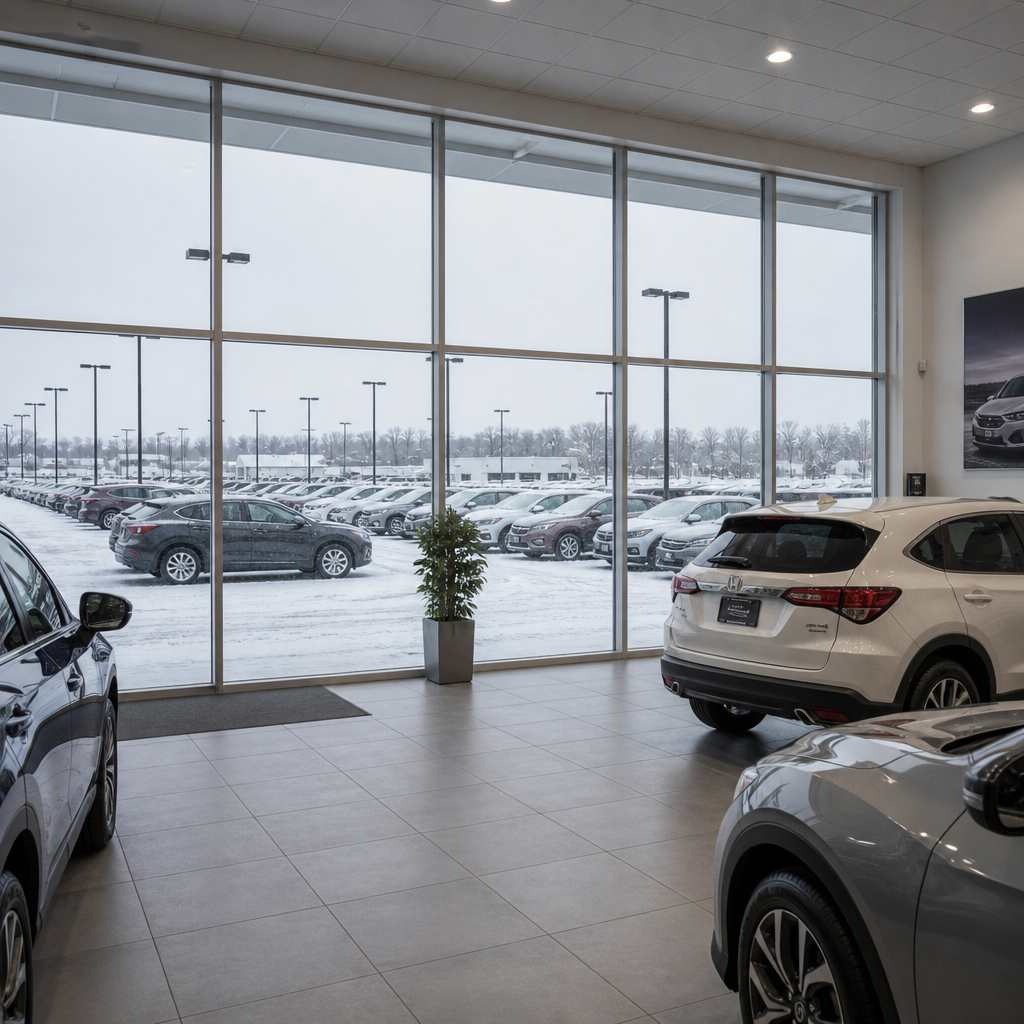

By the second week of February 2026, the dealership floor felt different — not quieter, not busier, just heavier. The national auto‑insurance spike wasn’t a headline anymore; it was a lived reality. Repair‑cost inflation, flood-related payouts, uninsured motorists, all on the rise. Resulting in a shockwave that reached every wallet or purse in the country.
Managers noticed it first in the rhythm of the day. Morning appointments that used to start with excitement now began with frustration. Customers arrived already defensive, already calculating, already angry at something the dealership didn’t control. They weren’t mad about pricing — they were mad about the system. They had just learned their insurance bill would jump 20 percent, and now they were staring at a payment sheet that made the whole idea of a new car feel reckless.
Salespeople had to relearn empathy. The usual scripts didn’t work. “We can get you into this for $599 a month” sounded tone‑deaf when the buyer’s insurance renewal added another $180 to their monthly cost of ownership. The conversation shifted from price to total exposure. Buyers wanted to know which models were cheaper to insure, which trims had lower repair costs, which safety features actually mattered to underwriters. Suddenly, the salesperson wasn’t just selling a car — they were selling a complete financial picture.
Finance managers felt the pressure most acutely. Deals that looked solid on paper collapsed in the final stretch. Lenders approved the credit, buyers agreed to the terms, and then buyer remorse instantly set in when the insurance was shifted to the new vehicle. A $2,400 annual premium on a midsize crossover could kill a deal faster than any interest‑rate hike. Managers started keeping a mental list of “insurance‑friendly” models — vehicles with lower claim histories, cheaper parts, and better safety ratings.
The macro‑economic roots of the crisis were complex. Repair‑cost inflation had been building for years, driven by expensive sensors, ADAS calibration, and technical labor costs. Climate‑related claims — floods, hail, wildfires — had forced insurers to reprice entire regions. Actuarial models were rewritten to account for higher claim frequency and cost severity. The result was a nationwide repricing of risk, and dealerships became the front line of consumer reaction.
In markets like California, Texas, and Florida, the effect was immediate. Buyers who once traded every 36 months started holding vehicles longer. Lease penetration dropped. Extended‑warranty sales rose. Service departments saw an uptick in maintenance work as customers tried to preserve what they already owned. The dealership ecosystem began to tilt toward retention instead of acquisition.
Managers adapted and in some cases, partnered with local agents to pre‑quote coverage before the test drive. A few even started advertising “low‑insurance‑impact” vehicles — a phrase that didn’t exist six months earlier. The smartest operators realized that transparency was the only antidote to frustration. They stopped pretending insurance was someone else’s problem and started treating it as part of the negotiation.
The psychological shift was fascinating. Buyers who once measured value in horsepower or tech features now measured it in predictability. They wanted stability. They wanted to know that their monthly cost wouldn’t explode next renewal. They wanted to feel safe not just physically but financially. That subtle change in buyer motivation rippled through every conversation on the lot.
Salespeople who understood the new psychology thrived. They stopped pushing aspirational vehicles and started guiding buyers toward rational ones. They learned how to talk about total cost of ownership without sounding like accountants. They reframed “affordability” as “resilience.” They sold peace of mind instead of excitement. And in a month defined by frustration, that approach worked.
The insurance shockwave also exposed a generational divide. Younger buyers — especially first‑time owners — were blindsided. They hadn’t budgeted for premiums that rivaled their car payments. Older buyers, meanwhile, remembered previous cycles of insurance volatility and adjusted quickly. They shifted to safer trims, smaller engines, and vehicles with proven reliability. The showroom became a study in behavioral economics: two generations reacting to the same macro event in completely different ways.
Manufacturers even began to accelerate plans to highlight repair‑cost efficiency in marketing. Others quietly adjusted incentive structures to move models with lower insurance exposure. The relationship between factory and dealer evolved — not around volume, but around risk mitigation. February 2026 marked the first time in years that insurance data influenced allocation strategy.
By mid‑month, the tone inside dealerships had changed again. The initial frustration gave way to adaptation. Managers stopped complaining and started strategizing. They built new talking points. They trained staff to handle insurance objections. They created internal cheat sheets listing which models had the lowest average premiums. They turned a macro‑economic shock into a micro‑level advantage.
Buyers noticed. The dealerships that acknowledged the insurance crisis earned trust. The ones that ignored it lost deals. Transparency became a competitive weapon. A salesperson who could explain why a certain model cost less to insure suddenly had leverage. A finance manager who could show how a different trim saved $600 a year in premiums could close a deal that would otherwise die.
The insurance shockwave didn’t destroy the market — it redefined it. It forced dealerships to evolve from transactional environments into advisory ones. It made managers think like risk analysts. It made salespeople think like financial counselors. It made buyers think like actuaries. And it reminded everyone that macro‑economic forces don’t just shape headlines — they shape human behavior.
By the end of February 2026, the frustration had settled into realism. The buyers weren’t happy, but they were informed. Dealers weren’t comfortable, but they were adaptive. The market had absorbed the shock. The insurance crisis became another variable in the negotiation equation — one more number to manage, one more story to tell, one more reminder that the automotive business doesn’t exist in isolation. It lives inside the economy, and when the economy shifts, the showroom shifts with it.